
Guppy Care Guide
Guppies are one of the most popular tropical fish in the world. Known for their bright colours, flowing tails, and peaceful nature, they are an excellent choice for both beginner and experienced fishkeepers.
At Friendly Fish Aquatics in Harlow, Essex, we stock a wide range of beautiful guppy varieties. All of our guppies go through a careful quarantine process and are gradually acclimatised to local water conditions, helping them settle easily into home fish tanks.
Overview
Guppy Care at a Glance
Overview
Guppies (Poecilia reticulata) are small, lively tropical fish famous for their incredible variety of colours and tail shapes. Over many years of selective breeding, aquarists have developed dozens of different colour patterns and fin styles.
Despite these differences in appearance, all guppies share the same basic care requirements, which makes them one of the easiest fish species to keep.
They are peaceful community fish that are constantly active in the aquarium, adding colour and movement to the upper and middle areas of the tank.
Scientific name: Poecilia reticulata
Common name: Guppy
Adult size: 3–5 cm
Ideal tank size: 60 cm aquarium
Temperature: 22–26°C
pH: 6.8–7.8
Temperament: Peaceful
Diet: Omnivore
Difficulty: Beginner friendly
Lifespan: 2–3 years
Identification
Guppies are small tropical fish known for their bright colours and flowing tails. One of the most noticeable features of guppies is the clear difference between males and females.
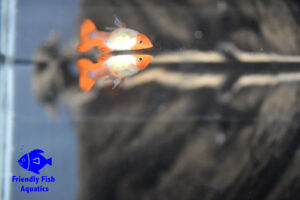
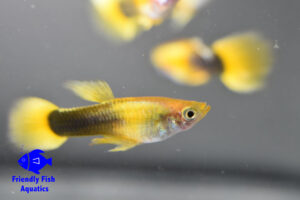
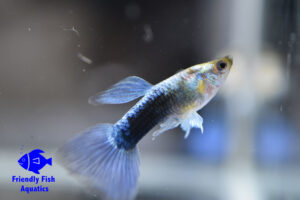
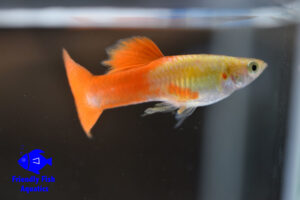
Male guppies are usually smaller and much more colourful. They often display bright patterns such as reds, blues, yellows, and metallic colours, along with large decorative tail fins.
Female guppies are larger and usually have more subdued colouring, often appearing grey or silver with less elaborate tail fins.
Another easy way to identify female guppies is the presence of a dark gravid spot near the back of the abdomen, especially when they are carrying fry.
Because guppies have been selectively bred for many years, they now appear in a wide range of colours, patterns, and tail shapes, although their care requirements remain the same.
Tank Size
Guppies grow to around 3–5 cm (1.2–2 inches) depending on the strain and whether the fish is male or female.
A fish tank with a minimum length of around 60 cm is recommended for a small group.
Because guppies are active swimmers and often kept in groups, larger tanks allow them to display more natural behaviour and provide a more stable environment.
Many fishkeepers keep guppies in planted community tanks, where their colours really stand out.
Water Conditions
Typical guppy care guidelines include:
Temperature: 22–26°C
pH: 6.8–7.8
Water hardness: Moderate to hard
Guppies generally prefer slightly harder and more alkaline water than many other tropical fish.
However, guppies sold at Friendly Fish Aquatics have already been acclimatised to local tap water in Harlow and across Essex, meaning most customers can keep them successfully without making special adjustments.
Regular water changes and a properly cycled fish tank are far more important than chasing perfect numbers.
Natural Habitat
Wild guppies originate from northern South America, including parts of Venezuela, Guyana, and Trinidad.
They typically live in slow-moving streams, ponds, and shallow waterways where vegetation is common.
Because of this, they tend to thrive in aquariums that include:
Live plants
Open swimming areas
Gentle filtration
Planted aquariums often show off guppy colours particularly well.
Setting Up the Fish Tank
A well designed guppy aquarium should include a mix of plants and open swimming space.
Good plant choices include:
Java Fern
Anubias
Cryptocoryne species
Hygrophila
Floating plants such as Amazon Frogbit
Plants provide hiding spaces for young fish and help create a more natural environment.
A gentle filter with good biological filtration will help maintain stable water conditions.
Behaviour and Group Size
Guppies are active, social fish that enjoy being kept with others of their own kind.
They are often kept in small groups and spend most of their time swimming in the upper and middle areas of the fish tank.
Guppies can be kept in:
Male only groups
Mixed groups of males and females
Male guppies are typically much more colourful, while females are larger and more subdued in colour.
Because guppies are livebearers, keeping males and females together will often result in baby guppies (fry). Many fishkeepers keep maleonly groups to prevent breeding.
Feeding Guppies
Guppies are omnivores and will accept a wide variety of foods.
A good diet can include:
High quality tropical flake food
Micro pellets
Frozen foods such as daphnia or brine shrimp
Occasional live foods
Feeding a varied diet helps maintain bright colours and strong health.
Tank Mates
Guppies are peaceful community fish and can live alongside many other species.
Suitable tank mates include:
Corydoras catfish
Small tetras
Rasboras
Kuhli loaches
Peaceful gouramis
Platies and other peaceful livebearers
Avoid keeping guppies with large or aggressive fish, or species known for fin-nipping.
Popular Guppy Varieties
One of the reasons guppies are so popular is the huge variety of colours and tail patterns available.
At Friendly Fish Aquatics we regularly stock different strains including:
Cobra Guppies
Mosaic Guppies
Tuxedo Guppies
Dumbo Ear Guppies
Grass Guppies
Half Black Guppies
Stock changes regularly, so visiting the shop is often the best way to see the latest varieties available.
Quick Summary
Peaceful tropical community fish
Grows to around 3–5 cm
Very colourful with many different varieties
Suitable for planted community fish tanks
Easy to care for and good for beginners
Frequently Asked Questions
Are guppies good for beginners?
Yes. Guppies are considered one of the best fish for beginners because they are hardy, adaptable, and easy to feed.
How many guppies should be kept together?
A small group of 4–6 fish or more works well, although larger groups often create a more colourful display.
Do guppies breed easily?
Yes. Guppies are livebearers and can reproduce frequently when males and females are kept together.
What size fish tank do guppies need?
A 60 cm aquarium or larger is ideal for a small group.
Can guppies live with tetras?
Yes, many peaceful tetra species make excellent tank mates.
Fish That Go Well With Guppies
Guppies are peaceful fish and work well in a wide variety of community fish tanks. When choosing tank mates, it is best to select species that enjoy similar water conditions and have a calm temperament.
Some good companions include:
Rasboras
Species such as Harlequin Rasboras are peaceful schooling fish that occupy the middle area of the tank and mix well with guppies.
Corydoras Catfish
Corydoras are gentle bottom-dwelling fish that help keep the lower part of the tank active without disturbing other species.
Kuhli Loaches
These eel-like fish spend most of their time exploring the bottom of the aquarium and work well with guppies because they use different areas of the tank.
Peaceful Gourami Species
Small gouramis such as Honey Gouramis can act as calm centrepiece fish in a community tank.
Platies and Other Livebearers
Platies share similar water requirements and temperament, making them easy companions for guppies.
Avoid aggressive fish or species that are known for fin-nipping.
Small Tip for customers
Guppies often look their best in planted aquariums with gentle water movement. Plants help create a natural environment and provide hiding spaces for baby guppies.
Keeping a variety of colourful guppies together can create a vibrant and constantly moving display in a community fish tank.
Visit Friendly Fish Aquatics
If you’re looking for guppies in Harlow or Essex, visit Friendly Fish Aquatics. We regularly stock a wide range of colourful guppy varieties suitable for community fish tanks.
All of our fish are carefully quarantined and acclimatised to local water conditions so you can add them to your aquarium with confidence.
Visit Friendly Fish Aquatics
Looking to buy Guppies See our fish currently in store at Friendly Fish Aquatics.